
Audio enters from a mixing desk or remote meeting route, is converted to the mono stream required by the recognition interface and sent at real-time speed. ASR returns revisable partial text and stable final segments. The application then handles segmentation, terminology, translation, correction and multi-endpoint publishing. Audio quality usually deserves attention before model switching.
The live ASR pipeline
- Obtain a clean microphone or meeting feed.
- Normalise sample rate, bit depth, channel count and packet timing.
- Route a known language or constrained candidate set.
- Merge partial revisions by stable segment identity.
- Detect a semantic boundary and finalise the segment.
- Apply terminology, deterministic replacements and correction.
- Send source text into translation and output channels.
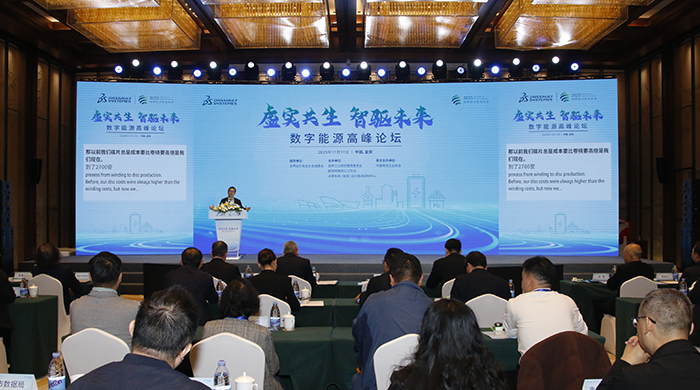
Audio is the first production asset
No recognition model can recover speech already masked by music, clipping or reverberation. Managed events should take a close-mic signal from the mixing desk rather than a distant laptop or camera microphone. A separate AUX bus can preserve a speech-only route while program audio keeps music.
| Problem | Caption symptom | First response |
|---|---|---|
| Low input | Missing short words | Check gain and microphone distance |
| Clipping | Unstable syllables | Reduce preamp gain |
| Room echo | Repeated text and poor boundaries | Use the close-mic bus |
| Music mixed in | Masked speech | Create a speech-only AUX |
| Crosstalk | Combined speakers | Improve microphone discipline |
Fixed language or language identification
A fixed source language is usually direct when the session is known. Continuous language identification can help when speech alternates within a constrained set. Microsoft documentation recommends supplying candidate locales and switching to a fixed language when short or noisy clips do not identify reliably. Multilingual support should not be described as unconstrained detection of any language.
Hotwords, terminology and replacements
Hotwords affect source recognition; translation terminology selects an approved target form; replacements enforce predictable final formatting. They solve different problems. Tencent Cloud documents hotword configuration for real-time streams, but a hotword remains a recognition bias rather than a guarantee.

Where caption latency comes from
Buffering, packet delivery, partial recognition, semantic segmentation, translation and endpoint refresh all contribute. Publishing too early causes distracting rewrites; waiting too long harms followability. A useful interface updates partial text quickly, finalises stable text and replaces revisions under one segment ID.
Acceptance checklist
- Rehearse with actual microphones and mixing desk
- Cover opening, specialist passages, figures and Q&A
- Test speaker accents and pace
- Check partial captions for duplication or rollback
- Confirm final, translation and correction order
- Simulate silence, network loss and device changes
- Record terms requiring operator attention
- Define human review for high-risk content
Frequently asked questions
Why does text appear and then change?
Real-time ASR publishes an initial hypothesis and revises it with later audio. The interface should update one stable segment rather than append every revision.
Is a higher sample rate always better?
The stream must match the interface contract. Upsampling does not repair poor source audio and can add conversion overhead.
Editorial note: This article combines public technical documentation with WALI project practice. Interface parameters and language support change; validate the current capability and actual event audio.